

ScreechPointJoin the pilot
Home / Recorder
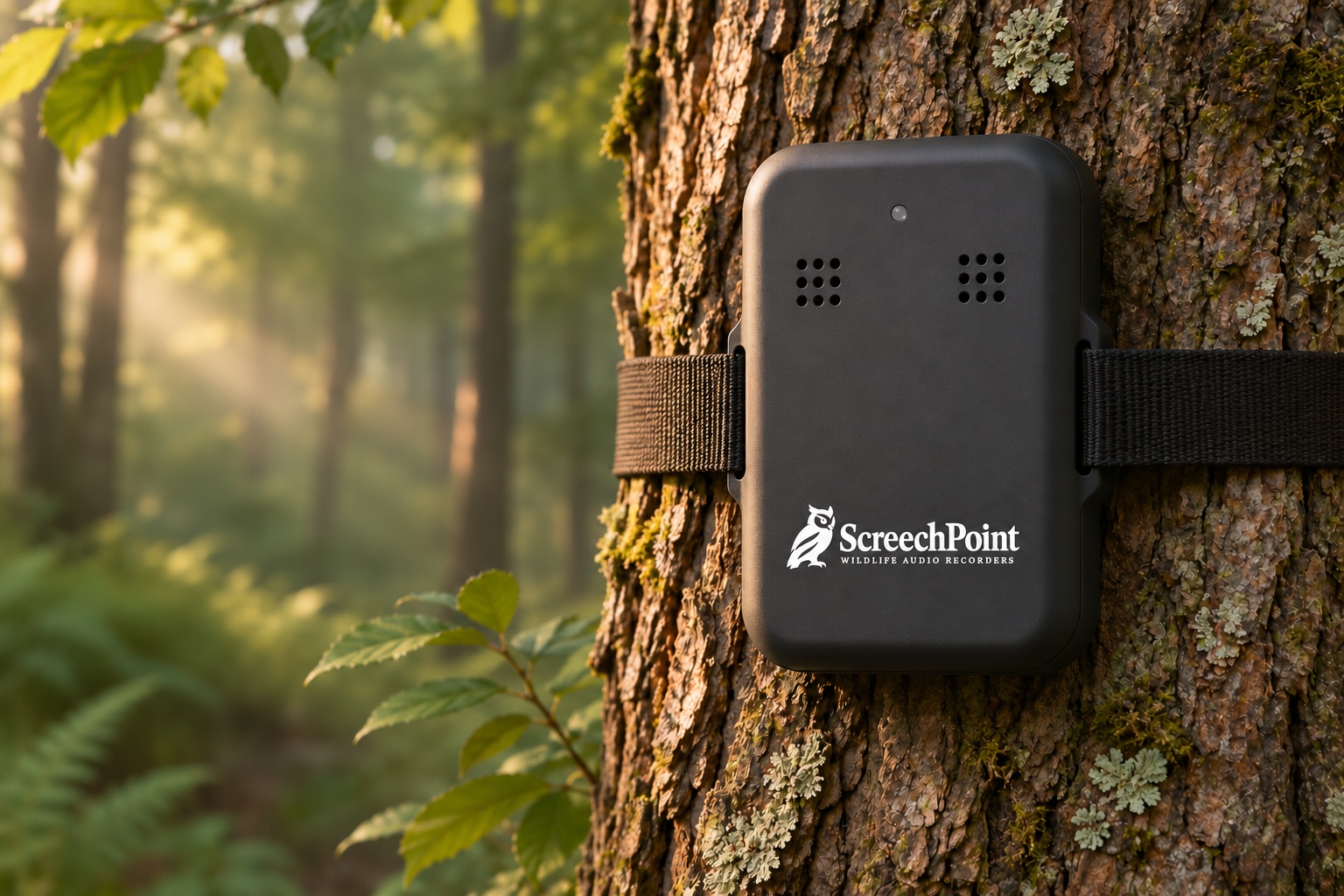
ScreechPoint recorder strapped to a tree trunk in a forest

Plate 01 · Styling conceptsHardware, packaging and accessories shown are concepts. Product design and specifications are in development.

In development · Pilot open

ScreechPoint Recorder

A wildlife audio recorder you strap to a tree and leave for the season. Scheduled recording, uncompressed audio and a sealed enclosure, designed with the people who will use it.

Version
Power
PriceShared with pilot partners

Not for sale yet. Pilot partners test prototypes alongside the recorders they use today and help decide what ships.

Sunrise and sunset schedules
Uncompressed WAV on the card
Microphone self-test
Sealed for the weather

Capabilities

What the first recorder is being built to do.

Each item is marked with where it stands. Items move from planned to tested as prototypes come back from the field.

WILDLIFE AUDIO RECORDERS
Microphone portsShielded from weather
Status lightShows it’s recording
Mounting strapTrunks, posts and poles
Sealed enclosureMatte charcoal
  • Microphone ports
  • Status light
  • Mounting strap
  • Sealed enclosure
Core

Schedules that follow the sun

Windows set relative to local sunrise and sunset, plus fixed times, duty cycles and date ranges. Time zone and daylight saving handled for you.
Core

Uncompressed recordings

WAV files on a removable card, with time, location, settings and status written into each file.

Core

Long deployments

Power use is a first design priority. Runtime will be published with the schedule, batteries and temperature used.

Core

Sealed enclosure

Built for rain, humidity and cold nights. We’ll publish an ingress rating after pilot testing.

Planned

Microphone self-test

A check at setup and on a schedule, so a fading or failed microphone is caught early.

Planned

Phone setup

Build a schedule once, apply it to every unit, and confirm each recorder is ready.

Exploring

Remote check-ins

Optional battery, storage and microphone status from the field.

Exploring

GNSS time and location

Satellite time and position, so recordings across a site line up to one clock.
CoreIn the first designPlannedIntended for launchExploringUnder evaluation
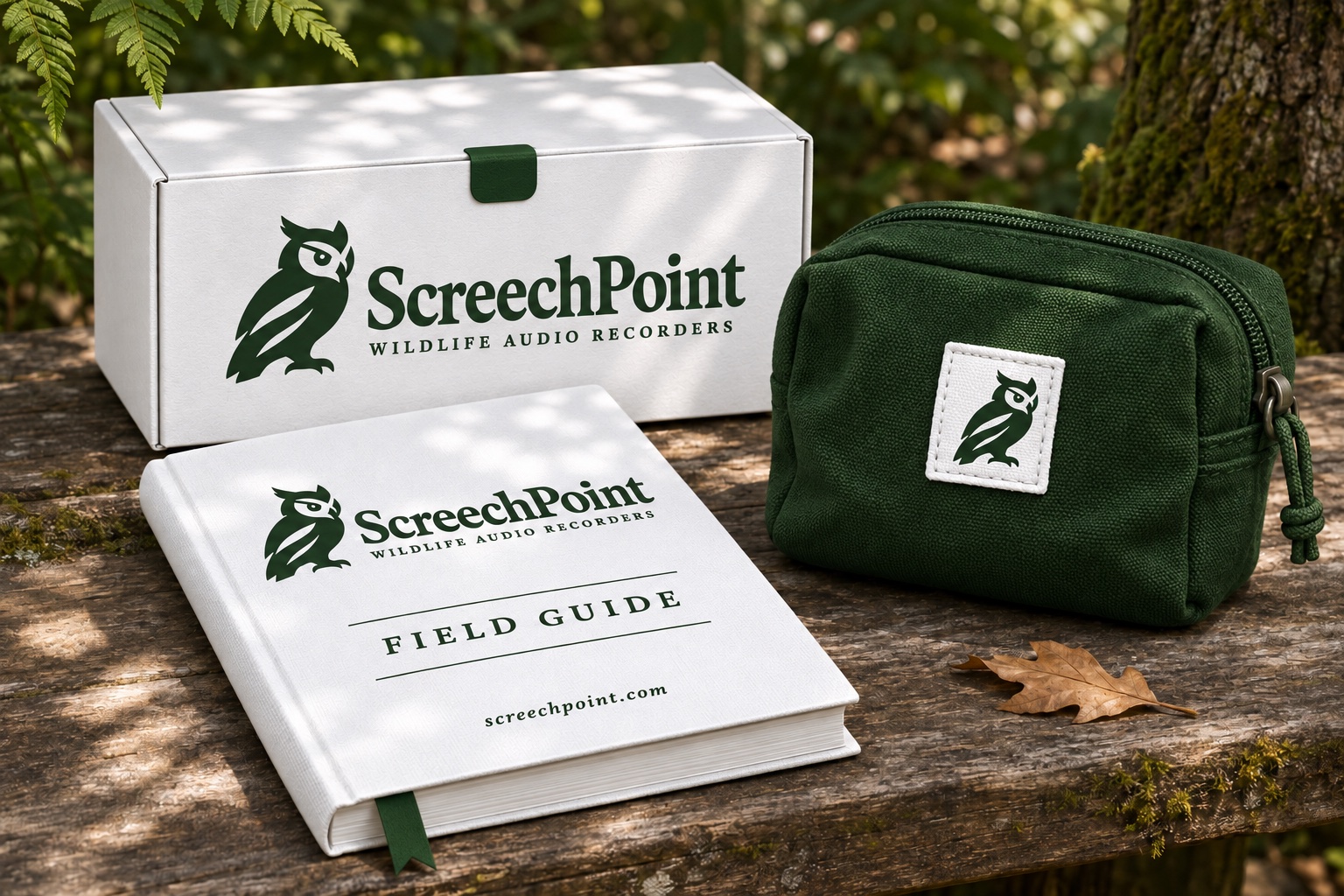
ScreechPoint box, field guide and green carrying pouch on a weathered log
Packaging concept. Box, field guide and pouch are proposed designs.

What’s in the box

Everything for the first deployment.

  1. 1

    ScreechPoint recorder

    Charcoal enclosure

  2. 2

    Mounting strap

    Trunks, posts and poles

  3. 3

    Field guide

    Setup and site notes

  4. 4

    Carrying pouch

    Green canvas, owl patch

Box contents are a proposal and may change before production.

Design targets

Specifications, as they stand.

These are design targets, not tested results. Anything marked “to be published” will appear here with its test conditions once prototypes have been measured.

Audio

Sample rates
8–96 kHzTarget
Format
16-bit uncompressed WAVCore
Channels
Mono, built-in microphone
External microphone
Input under evaluationExploring
Sensitivity and self-noise
To be published
Ultrasonic version
Full spectrum for batsExploring

Recording and files

Schedules
Sunrise and sunset relative, fixed times, duty cycles, date ranges
Metadata
Time, location, settings and status in each file
File names
UNIT_YYYYMMDD_HHMMSS.wav
Storage
Removable SD card
Time and location
Set at setup, GNSS under evaluationExploring

Power

Internal
Standard replaceable cells
External and solar
Input under evaluationExploring
Runtime
To be published with test conditions

Enclosure and setup

Housing
Sealed, charcoal, protected mic port
Ingress rating
To be published after pilot testing
Mounting
Strap for trunks, posts and poles, lockable
Setup
Phone appPlanned
Size, weight, operating range
To be published
We publish performance figures only with the conditions they were measured under. If a number you need isn’t here yet, tell us what you’d use it for and we’ll prioritize testing it.

Accessories

For harder sites.

Accessories we’re considering for long, exposed or public deployments. Tell us which would change how you work.

Solar kit

A small panel and cable for permanent monitoring sites.

Exploring

Security box

A lockable steel box and cable for public land and trails.

Exploring

Windscreen

A foam or fur cover to cut wind noise on exposed sites.

Exploring

Spare microphone

A field-replaceable element, so a worn mic isn’t a returned unit.

Exploring

In the field

Four steps at the tree.

Designed so a unit takes minutes, not a morning, and you leave knowing it will record.

1

Load a schedule

Pick a saved configuration on your phone, or build one around sunrise and sunset.

2

Strap it up

Mount on a trunk or post, microphone clear of leaves and bark.

3

Check and confirm

Microphone test, clock, location, batteries and card, all green before you leave.

4

Come back for the card

Swap the card on your next visit. Files are named and ready for analysis.

Questions

About the recorder.

Have a requirement we should design around? Tell us in your pilot application.

When will it be available?
We’re in the design stage and recruiting pilot partners now. Prototype timing depends on what we learn from them. Pilot partners hear first.
Will it work with BirdNET or Raven?
Recordings are standard uncompressed WAV files, which those tools open directly. We’re also writing time, location and settings into each file so they come through in your analysis.
Can I use my own microphone?
The first recorder has a built-in microphone. An external microphone input is under evaluation. If you need one, say so in your application.
Is the enclosure waterproof?
It’s designed as a sealed enclosure for rain and humidity. We’ll publish an ingress rating once prototypes have been through pilot sites and lab testing.
Do I need a phone to set it up?
A phone app is planned for setup and checks. We’re also looking at a way to load a configuration without one, for teams that prefer not to carry phones in the field.

Join the pilot

Help decide what ships.

Tell us your sites, species and what your current recorders are missing.